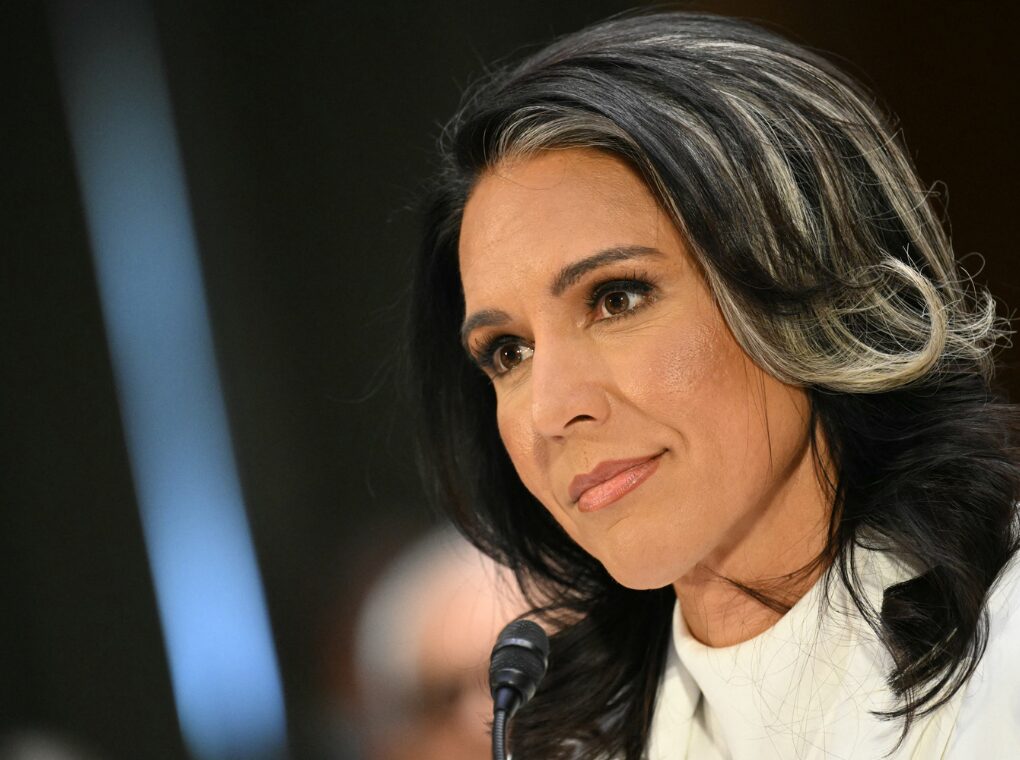
A political firestorm has erupted in Washington after U.S. Director of National Intelligence Tulsi Gabbard announced her resignation, citing her husband’s serious cancer diagnosis, while conflicting reports suggest she may have been pressured to step down by the White House.
The abrupt development has triggered intense speculation inside political and intelligence circles, with competing narratives emerging almost immediately, ranging from a deeply personal family health decision to an internal power struggle inside the Trump administration.
Gabbard cites husband’s cancer diagnosis in resignation letter
In her official resignation statement posted on X, Gabbard said her husband, Abraham Williams, has been diagnosed with a rare and serious form of bone cancer.
“At this time, I must step away from public service to be by his side and fully support him through this battle,” she wrote, adding that her final day in office would be June 30.
https://x.com/TulsiGabbard/status/2057876821421527476?s=20
Her announcement framed the decision as a personal and family-driven choice, emphasizing her need to prioritize caregiving responsibilities during a critical medical crisis.
U.S. President Donald Trump responded publicly on Truth Social, praising her service and expressing support for her husband’s recovery, saying he had no doubt Williams would “soon be better than ever.”
White House denies pressure, but reports of forced resignation emerge
Despite the official stance of a voluntary departure, a source familiar with internal discussions told Reuters that Gabbard may have been “forced out” by the White House.
The claim immediately intensified speculation about friction between Gabbard and senior administration officials.
However, the White House strongly rejected the allegation. Spokesperson Davis R. Ingle defended Gabbard’s tenure, calling her “an America First patriot” who had served “faithfully and extremely well” over the past 16 months.
Ingle dismissed suggestions of forced removal as “slanderous,” insisting the resignation was solely tied to her husband’s health condition.
The conflicting accounts have fueled uncertainty about whether the departure was a voluntary exit or the culmination of behind-the-scenes political tensions.
Growing internal tensions inside the intelligence leadership
Gabbard’s resignation comes amid reported friction within the U.S. intelligence and national security apparatus during the Trump administration’s current term.
Sources cited in U.S. media outlets suggest she had clashed with other senior officials, including CIA leadership, over policy direction and operational priorities.
Her tenure had already been marked by ideological divisions, particularly over foreign policy strategy and the administration’s approach to Iran and broader Middle East conflicts.
Gabbard, a former Democratic congresswoman who later broke with her party to support Trump, has long positioned herself as a critic of prolonged foreign military interventions. That stance reportedly placed her at odds with more hawkish figures within the administration especially in case of Iran war.
Foreign policy divisions and Iran strike controversy
According to multiple reports, tensions within the administration escalated following U.S. involvement in coordinated strikes involving Israel against Iran earlier this year.
Gabbard’s long-standing anti-war position reportedly placed her in a difficult political position, with internal disagreements emerging over the scope and justification of U.S. military engagement.
At least one other senior official, Joe Kent, director of the National Counterterrorism Center, also resigned earlier in the year, citing the inability to support the administration’s direction on military operations.
These departures have added to perceptions of instability within Trump’s national security team at a sensitive geopolitical moment.
Allegations of legal complications tied to past operations
Further controversy has emerged from commentary by legal analyst Scott MacFarlane, who suggested Gabbard’s presence during a controversial FBI raid on a Georgia election facility may have created legal and political complications for the administration.
According to MacFarlane, her involvement in high-profile domestic operations could raise questions about the politicization of intelligence leadership roles, particularly in cases tied to election disputes.
The Fulton County episode has already been the subject of ongoing legal and political battles, further complicating the narrative surrounding her departure.
Unverified claims about intelligence document disputes
Adding to the political turbulence, some media commentary has suggested that classified materials related to historical intelligence programs, including references to Cold War-era operations and JFK assassination records, were at the center of internal disputes involving intelligence leadership.
However, these claims remain unverified and have not been officially confirmed by U.S. authorities.
Pattern of high-level exits in the Trump administration
Gabbard’s resignation is the latest in a series of senior departures from key positions in recent months.
Officials, including Homeland Security Secretary Kristi Noem, Attorney General Pam Bondi, and Labor Secretary Lori Chavez-DeRemer, have all stepped down or been removed amid growing internal disagreements and policy disputes.
The turnover has raised questions about stability within the administration’s upper ranks, particularly in agencies handling national security, justice, and domestic policy enforcement.
Political implications ahead
Analysts say Gabbard’s exit could have broader implications for intelligence coordination and the administration’s foreign policy posture, especially given her unique political trajectory—from Democratic congresswoman to a key figure in a Republican administration.
Her departure also removes one of the most visible anti-intervention voices from inside the national security establishment.
While official statements emphasize family health reasons, the competing narratives emerging from political sources ensure that speculation around her resignation is unlikely to fade quickly.
Whether Tulsi Gabbard’s resignation is ultimately viewed as a personal decision driven by family tragedy or as the result of internal political pressure, it has already become one of the most closely watched political developments in Washington.
With conflicting reports from the White House, unnamed sources, and media analysts, the full story behind her exit remains unclear—but the political consequences are already unfolding