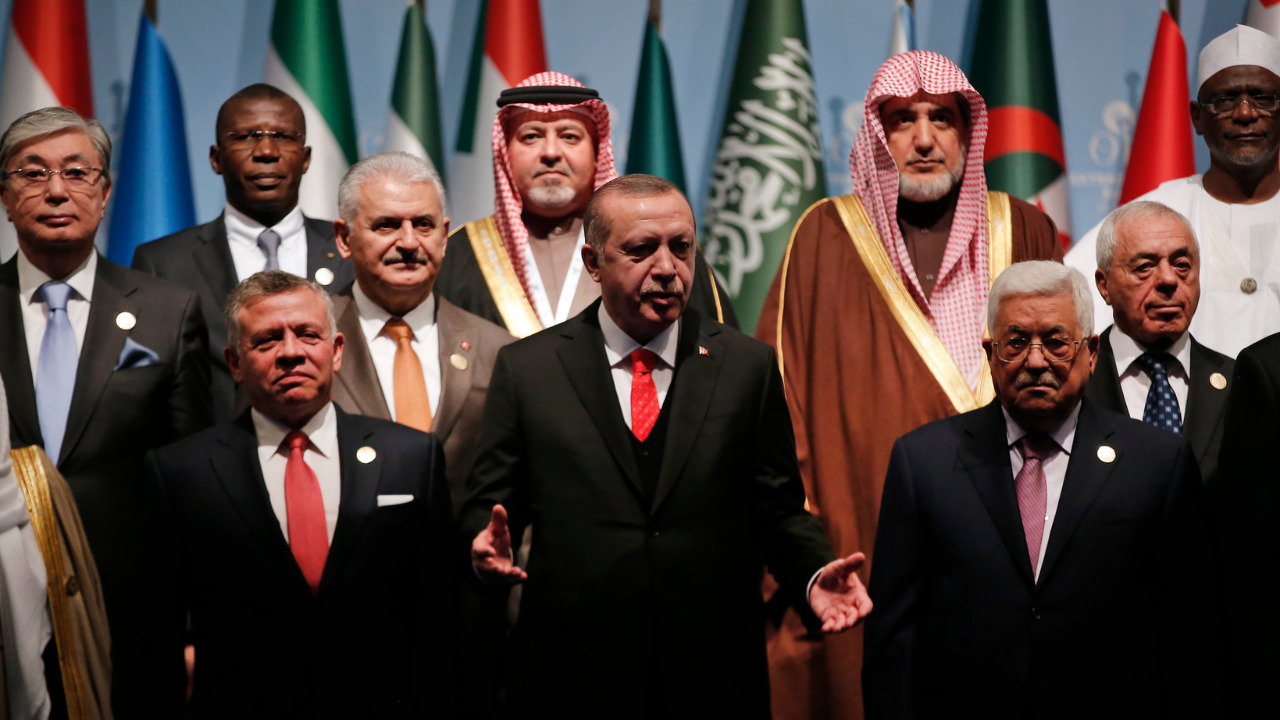
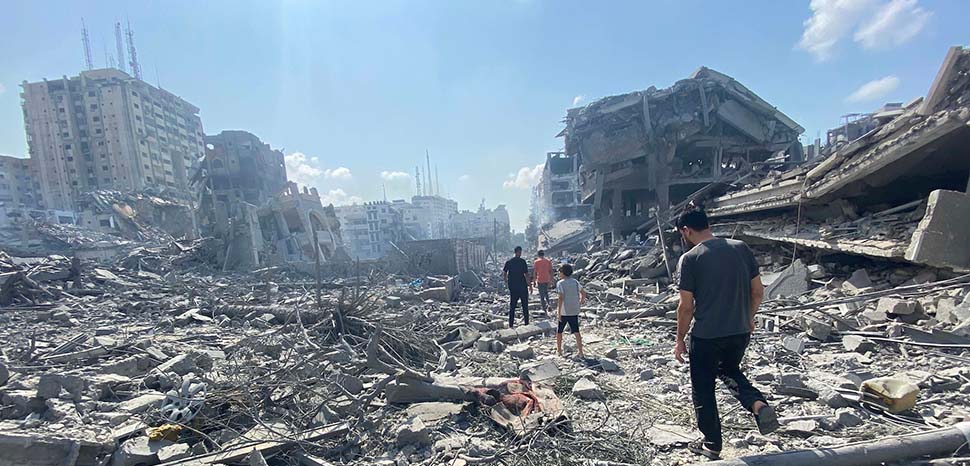
Amidst the ongoing Israel-Gaza conflict, the recent joint Arab League and OIC summit aimed to present a unified front among Islamic countries regarding the Palestine issue. However, while the joint statement condemned Israel’s actions, it also revealed underlying divisions within the Islamic world.
The summit’s statement condemned Israel’s denial of Palestinian rights but limited the term ‘occupation’ to areas acquired by Israel post the 1967 war, differing from Hamas and Iran, which extend it to encompass all of Israel. The statement’s support for the PLO and the two-state solution counters Hamas and Islamic Jihad’s maximalist approach, hinting at internal rifts.
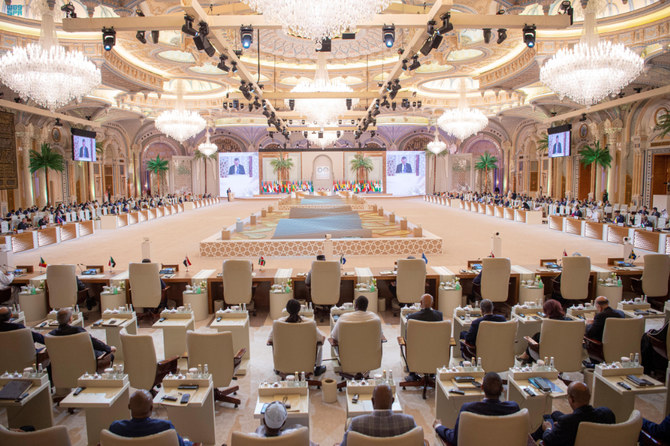
Moreover, negotiations during the summit revealed disagreements among Arab League countries, highlighting two camps: one advocating cooperation with Israel for geopolitical reasons, and the other, led by Iran, seeking strong measures against Israel as a means to weaken American influence.
Read More: Saudi Arabia’s Arabic Super Power Dream Gets Interrupted by Israel-Gaza War
That divisions underlie the purported united front is made plainer by certain details about the negotiations during preparation of the joint statement. In particular, four influential Arab League countries reportedly blocked “concrete measures” and opted for vague, non-committal clauses.
The concrete measures proposed were:
1) prohibition of US and other military bases for the supply of weapons and ammunitions to Israel;
2) freezing existing diplomatic, economic, and military relations between Arab states and Israel;
3) threats to leverage Arab energy and economic resources to stop the Israeli aggression. Nothing close to these proposals made its way into the joint statement.
Thus, Islamic states are, at the least, divided into two groups. One influential group, of which the ‘four influential Arab League countries’ are part of, view American and regional cooperation, including with Israel, as vital to their geopolitical objectives. The other group, the anti-American axis led by Iran, views Israel as an agent of the US and calls for strongest possible measures against it as an instrument to weaken American power in the region. The two groups view their interests antagonistically.
Countries like Iran and Turkey have been vocal in their support for Palestine. Iran, especially, is known for its strong backing of Palestinian groups, including Hamas, and its opposition to Israel’s policies. Turkey, under President Erdogan, has also been critical of Israel and supportive of the Palestinian cause, often using it as a platform to enhance its leadership role in the Muslim world.
On the other hand, some Gulf states, notably the UAE and Bahrain, have recently normalized relations with Israel, indicating a shift in their stance. This normalization is part of a broader realignment in the Middle East, where the priorities of certain Arab states are evolving, focusing more on countering Iran’s influence and fostering economic and strategic ties with Israel.
Saudi Arabia, while officially supporting Palestine, has also shown signs of a pragmatic approach. While the kingdom maintains its support for a Palestinian state, recent years have seen a subtle warming of relations with Israel, driven primarily by mutual concerns over Iran.
Egypt, historically a key player in Arab-Israeli peace efforts, continues to support Palestine but also maintains a peace treaty with Israel. Egypt often mediates between Israel and Palestinian groups in Gaza to broker ceasefires and facilitate negotiations.
Read More: Israel-Gaza War! You Still Don’t Understand Biden’s Sinister Agenda
The stance of these countries reflects a range of factors, including historical ties, religious affiliations, regional rivalries (especially between Saudi Arabia and Iran), and shifting global alliances. The recognition of Israel by some Arab countries, driven by strategic interests, represents a significant change in the traditional Arab solidarity with the Palestinian cause.
While there is general sympathy for the Palestinian plight among Islamic nations, the level of support and the approach to Israel vary significantly. This variance is influenced by each country’s geopolitical interests, regional rivalries, and the broader dynamics of Middle Eastern politics.
Watch More: