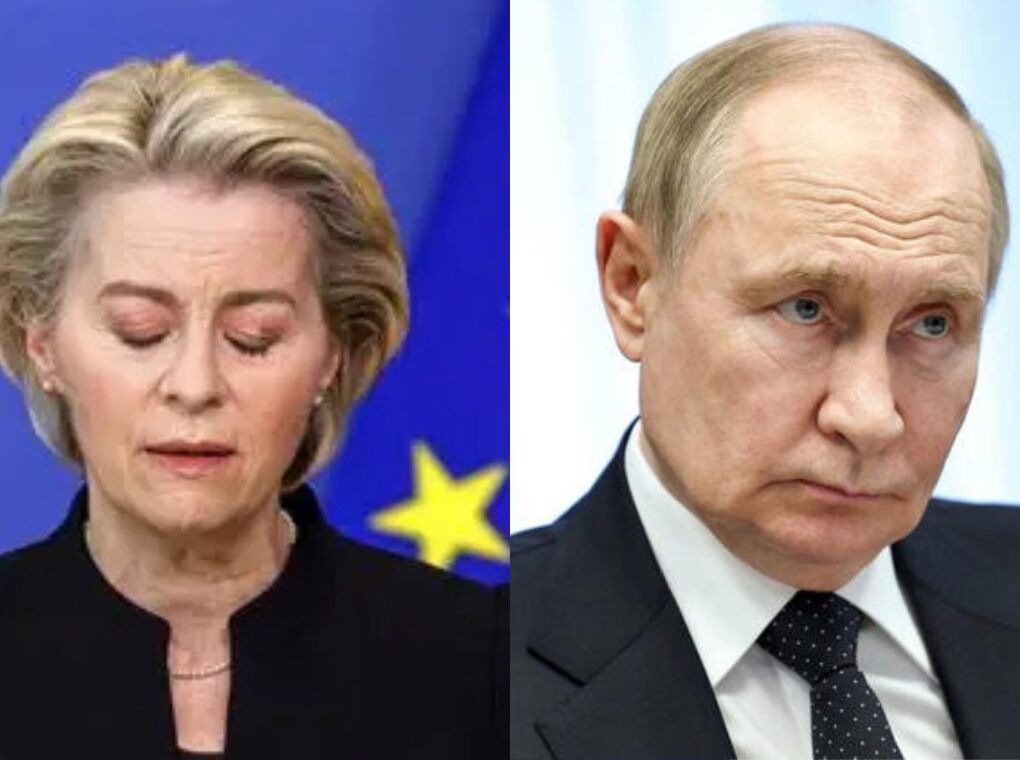
European Union leaders concluded a tense summit in Brussels yesterday, reaching a landmark agreement to proceed with a “reparations loan” to Ukraine backed by frozen Russian central bank assets worth approximately €210 billion.
The decision, hailed by supporters as a bold step to make “the aggressor pay,” has immediately escalated economic confrontation with Moscow, which has reiterated threats to confiscate up to $127 billion in remaining Western corporate investments inside Russia.
The move comes at a critical juncture for Ukraine, nearly four years into Russia’s full-scale invasion. With U.S. military aid paused under the incoming Trump administration and Kyiv facing potential funding shortfalls as early as spring 2026, European leaders framed the loan as essential to sustaining Ukraine’s defense and reconstruction efforts.
Details of the EU Agreement
The package approved on December 18 includes an initial loan tranche of up to €90 billion, with the potential to scale up to €165 billion over 2026-2027. Funds will support both military procurement and civilian needs. Crucially, the loan is structured to be effectively interest-free for Ukraine: Kyiv would only repay if and when Russia provides formal war reparations.
To enable this mechanism, the EU formalized the indefinite freeze of Russian sovereign assets—primarily securities and cash held at Belgium’s Euroclear depository—removing previous requirements for periodic renewals. This addresses concerns over potential vetoes from member states sympathetic to Moscow, such as Hungary.
European Commission President Ursula von der Leyen described the outcome as a demonstration of “European unity and resolve.” Polish Prime Minister Donald Tusk, a strong advocate, warned that failure to act would mean “money today or blood tomorrow—not just for Ukraine, but for all of Europe.”
Russia’s Immediate Response and Retaliatory Threats
The Kremlin wasted no time in condemning the decision. Russian officials labeled the use of frozen principal assets as “theft” and a violation of international law, vowing symmetrical countermeasures.
Central to Moscow’s leverage is a September 2025 decree signed by President Vladimir Putin, which introduces an accelerated procedure for nationalizing foreign-owned subsidiaries in response to “hostile actions” abroad. Analysts and European officials now expect Russia to invoke this mechanism if the loan proceeds.
According to data from the Kyiv School of Economics, Western companies still have exposure of approximately $127 billion in Russia. More than 2,315 firms from the U.S., EU, and UK continue operations, despite widespread exits since 2022. These entities generated $19.5 billion in profits last year alone, much of which remains trapped due to Russian restrictions on dividend repatriation.
Specific vulnerabilities include:
Major European banks with profitable Russian subsidiaries, such as Austria’s Raiffeisen Bank (which reported $2.9 billion in Russian revenue last year) and Italy’s UniCredit.
Accumulated dividends and coupons are held in special “Type C” accounts for investors from “unfriendly” countries. Examples include hundreds of billions of rubles owed to BP from its former Rosneft stake and substantial frozen funds belonging to JPMorgan.
Reciprocal assets linked to Euroclear clients, estimated at €17 billion.
Russia has already demonstrated willingness to act: since 2022, it has seized or frozen assets from at least 32 Western companies, resulting in $57 billion in losses.
Former Russian central bank official Alexandra Prokopenko described the Type C accounts as one of Moscow’s key “trump cards,” providing a ready source of budget revenue at a time of fiscal strain from elevated defense spending.
Lingering European Concerns and Divisions
Despite the agreement, significant unease persists among several member states, highlighting the risks of escalation.
Belgium, home to Euroclear, secured commitments for shared EU liability in case of Russian lawsuits or retaliation—Russia has already filed claims against the depository in Moscow courts. Belgian officials had warned that without full protection, the plan could destabilize a critical pillar of the Eurozone financial infrastructure.
Italy supported the indefinite freeze but expressed reservations about proceeding to actual loans. Claudio Borghi, a parliamentarian from the ruling Lega party, had cautioned: “How can you think that the actual theft of another country’s money will not lead to further disaster? The first consequence will be that Russia will feel entitled to confiscate all foreign assets.”
Austria voiced similar fears over the potential nationalization of Raiffeisen’s highly profitable Russian operations. One Austrian diplomat described the situation as “uncharted legal territory” and criticized the European Commission for insufficient consultation with concerned member states.
Broader Implications for Global Finance
The EU’s decision marks a significant evolution in Western sanctions—from freezing assets to actively leveraging them for wartime financing. Proponents argue that it upholds moral and legal principles while deterring future aggression. Critics, however, warn of dangerous precedents: eroding sovereign immunity protections, undermining trust in European financial depositories, and accelerating the fragmentation of the global economic order.
For Russia, retaliatory seizures would primarily harm private Western investors rather than governments, potentially deepening corporate reluctance to operate in emerging markets perceived as high-risk.
As implementation details are finalized in the coming weeks, both sides appear locked in a high-stakes game of deterrence. The outcome will not only affect Ukraine’s ability to sustain its defense but could reshape international norms on asset treatment in conflicts for decades to come.